If you have ever stood at the edge of a weights area, wondered what on earth everyone was doing and quietly walked back to the treadmill, this one is for you. Strength training for women is not about becoming a different person. It is about getting stronger at the things you already do, feeling more capable in your own body and, very often, surprising yourself.
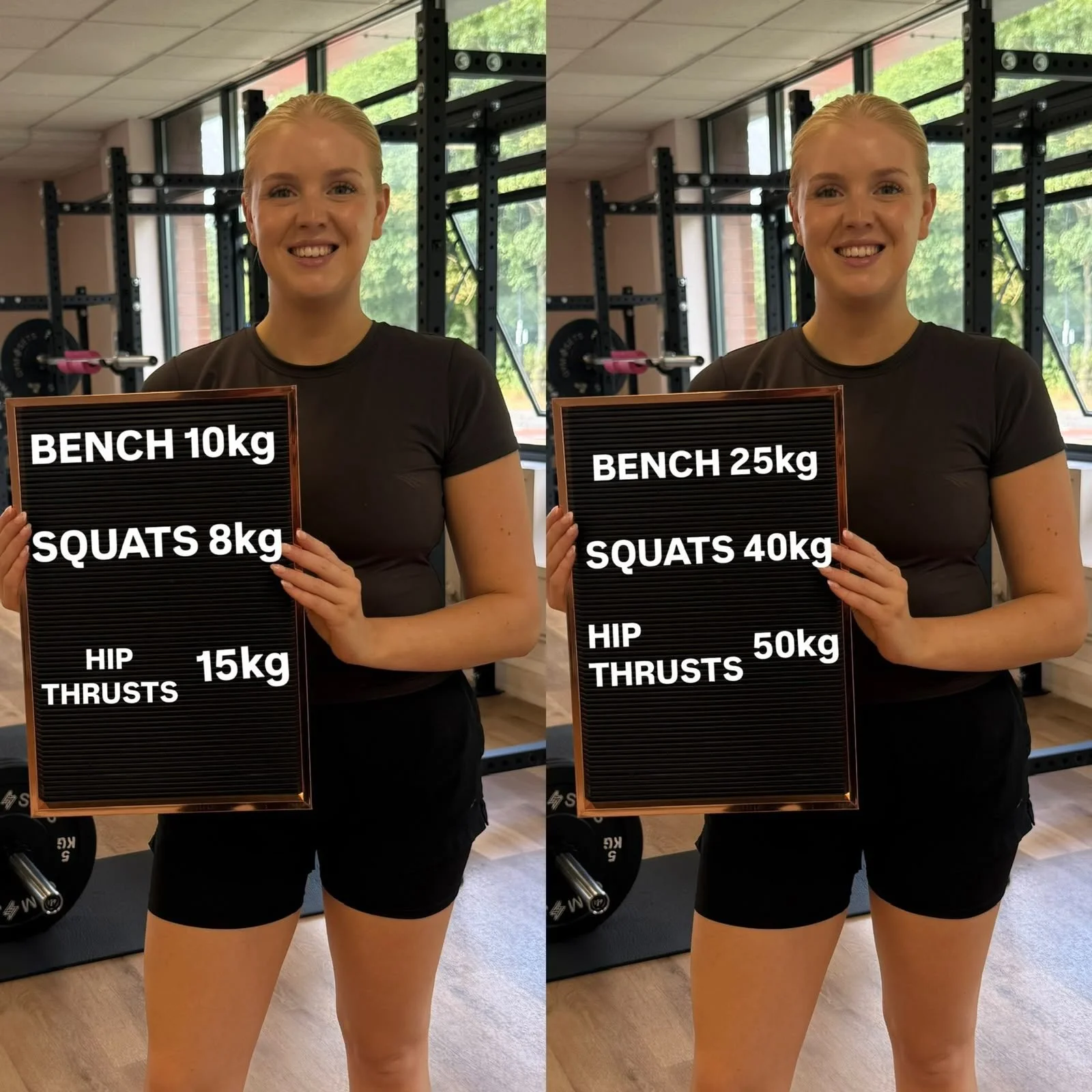
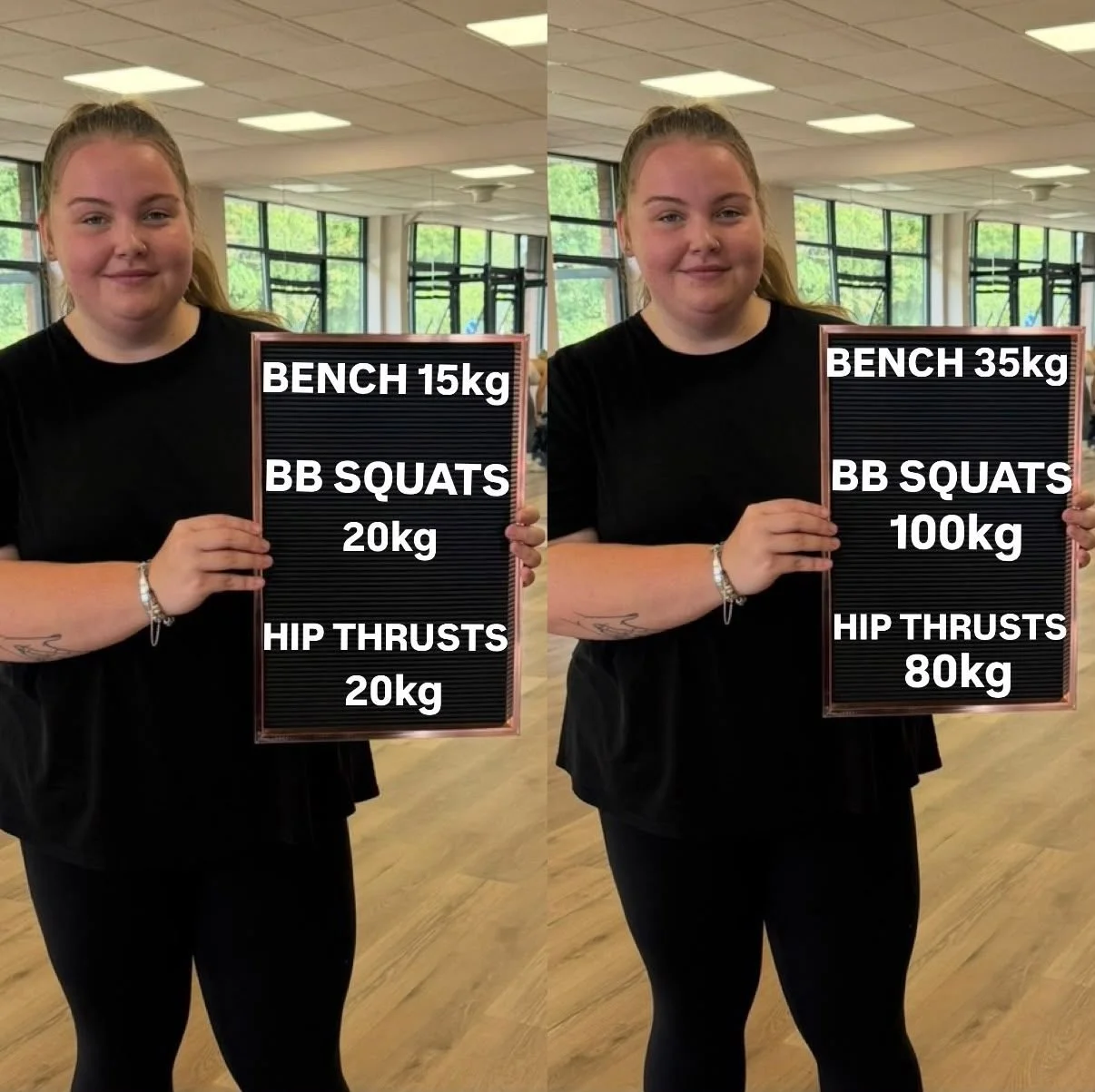
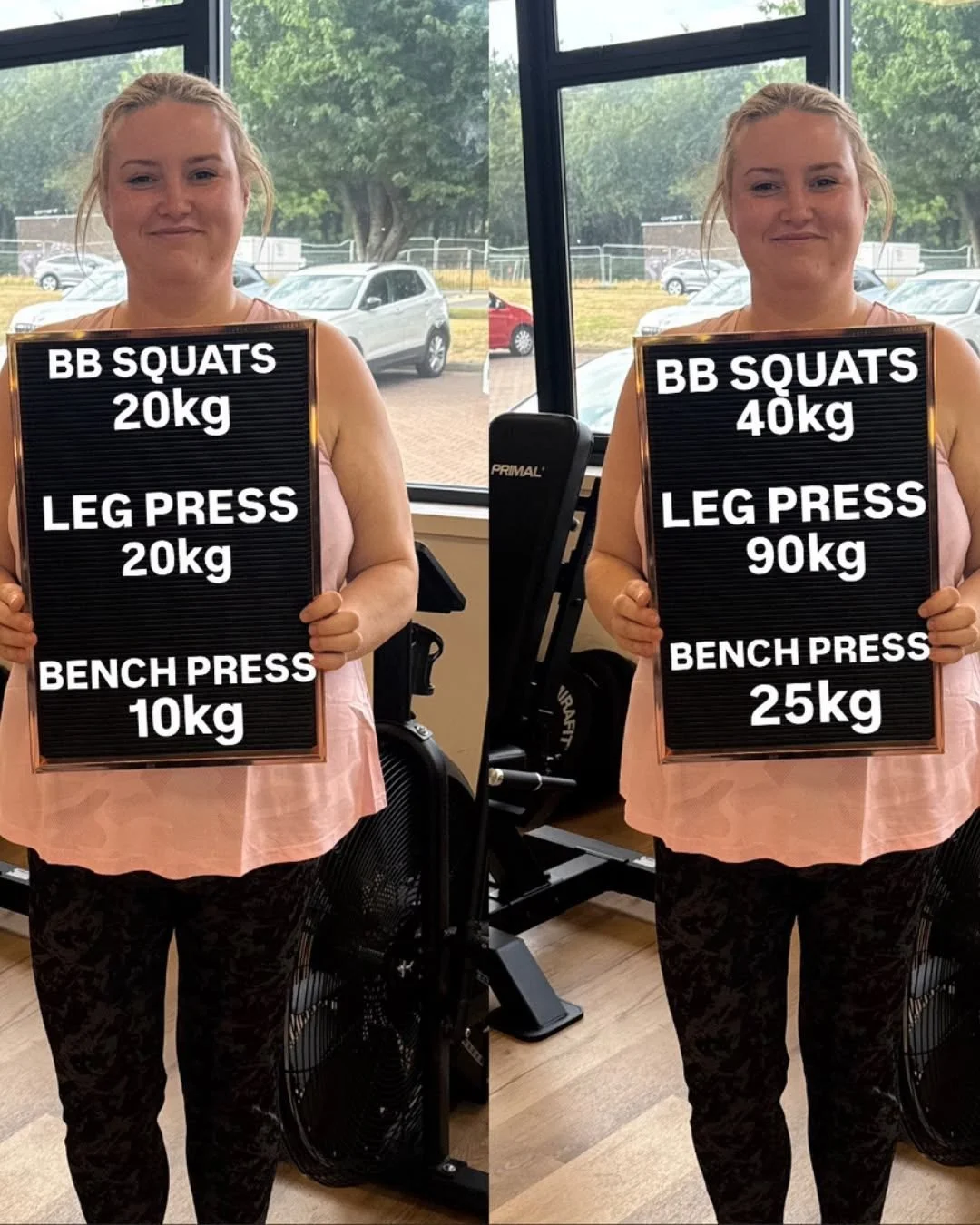
At strongher Studio, our small women-only gym in Washington, beginners are the norm rather than the exception. So instead of theory alone, this guide is built around three of our members and the numbers they wrote on their own before and after boards.
Why strength training matters for women
Muscle does far more than change how you look. It is what lets you carry the shopping in one trip, lift a toddler without wincing and get up off the floor without thinking about it. Resistance training is one of the most reliable ways to build and keep that muscle, and research consistently links it with stronger bones, better balance and healthier joints as we get older.
It is also recommended, not optional extra credit. The UK Chief Medical Officers' physical activity guidelines advise adults to do muscle-strengthening activity on at least two days a week, alongside general movement. Lifting weights is one of the simplest ways to tick that box, and you do not need hours to do it.
Then there is the part that is harder to measure. Plenty of women find that getting stronger changes how they feel walking into a room, not just a gym.
The myths that keep women away
"I'll get bulky"
This is the big one, and it is mostly a myth. Building large amounts of muscle takes years of very specific training and eating, and most women have far lower levels of testosterone than men, which makes it slower still. What beginners usually notice is feeling firmer, standing taller and finding everyday tasks easier.
"Weights are bad for your joints"
Lifting with good technique and sensible loads is generally kind to joints, because stronger muscles help support them. The key words are good technique, which is exactly why coaching matters so much at the start.
"I need to lose weight first"
You do not need to get fit before you get strong. You start with what you can do today, and the programme moves with you.
How a beginner actually progresses
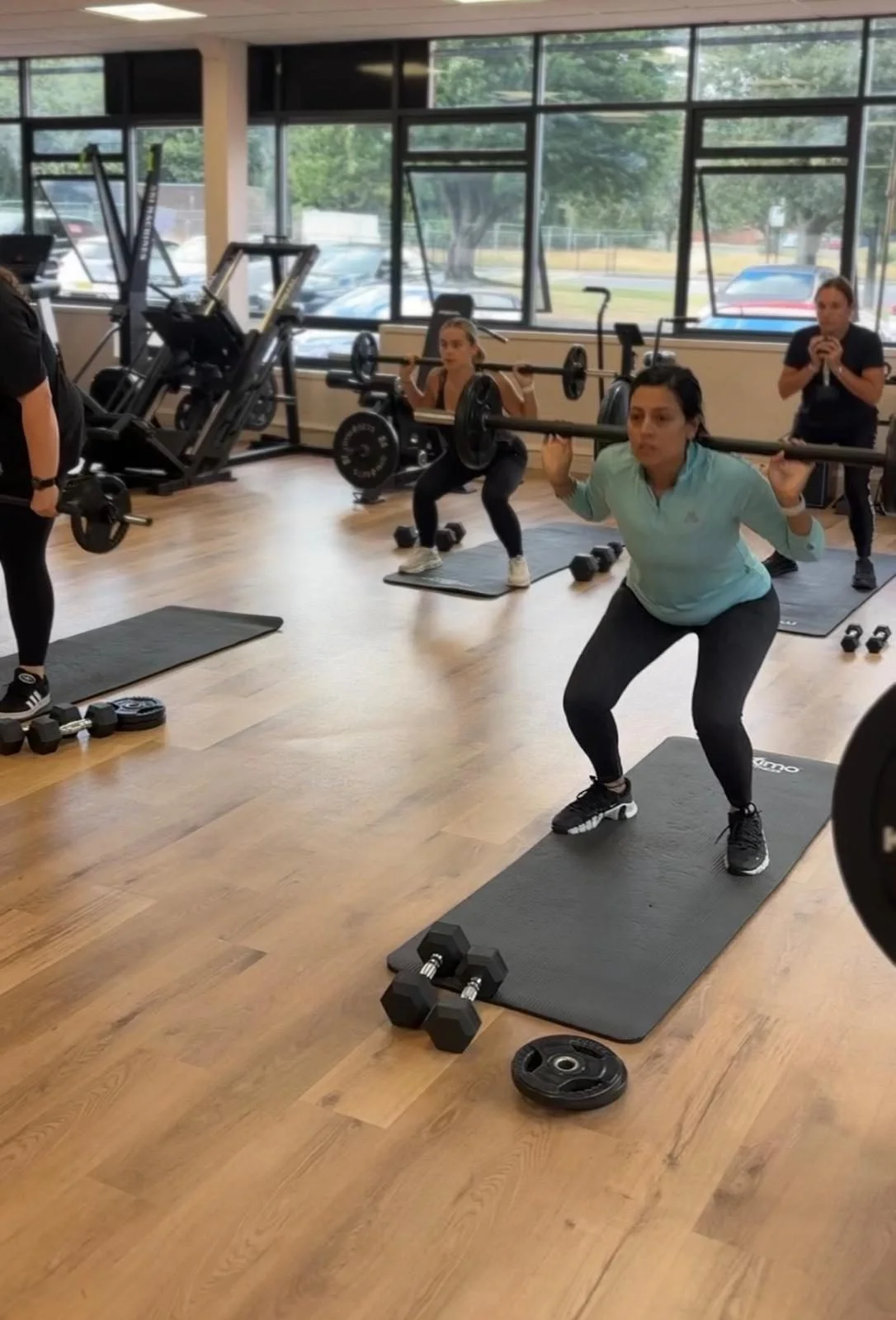
Weight training for women beginners follows the same principle as for anyone else: progressive overload. You ask your body to do slightly more than it is used to, give it time to recover, and it adapts by getting stronger. Then you ask for a little more again.
In practice that looks like this:
- Learning the main movement patterns first: squat, hinge, push, pull and carry.
- Starting light enough that your form stays solid for every rep.
- Adding weight, reps or sets gradually, in small steps, once a movement feels confident.
- Keeping a note of what you lifted so you can see the progress for yourself.
That is how our second member went from squatting the empty 20kg barbell to a 100kg barbell squat. No shortcuts, just steady, coached progress, one session at a time.
Our third member doubled her barbell squat from 20kg to 40kg, took her leg press from 20kg to 90kg and her bench press from 10kg to 25kg. Different starting points, different journeys, the same method.
What your first strength session at strongher looks like
Walking in for the first time is often the hardest rep of all, so we keep it simple. If you want to see the place first, you can book a free look around through our contact page, and our guide to your first visit to a women-only gym in Washington walks you through what to expect on the day.
When you train, your coach will chat with you about what you want from it and anything you need them to know, such as an old injury. From there you warm up, then learn the movements with bodyweight or light weights before anything heavier goes on the bar. Nobody is thrown in at the deep end, and nobody is watching you except the coach whose job it is to help.
Where you start depends on you. strongher Small Group PT gives you your own programme with a coach watching your technique throughout. Lift Club teaches barbell and dumbbell work from the ground up. Sculpt uses lighter weights and higher reps for the whole body. And our mat and reformer Pilates classes build the core strength and control that make lifting feel better. You can see them all on our classes page.
Safety and coaching
If you are looking for a gym for beginners, coaching is the thing to ask about. Good technique protects you and it is also what lets you keep progressing, because a movement done well can be loaded safely over time.
- Your coach watches your form and adjusts it as you go.
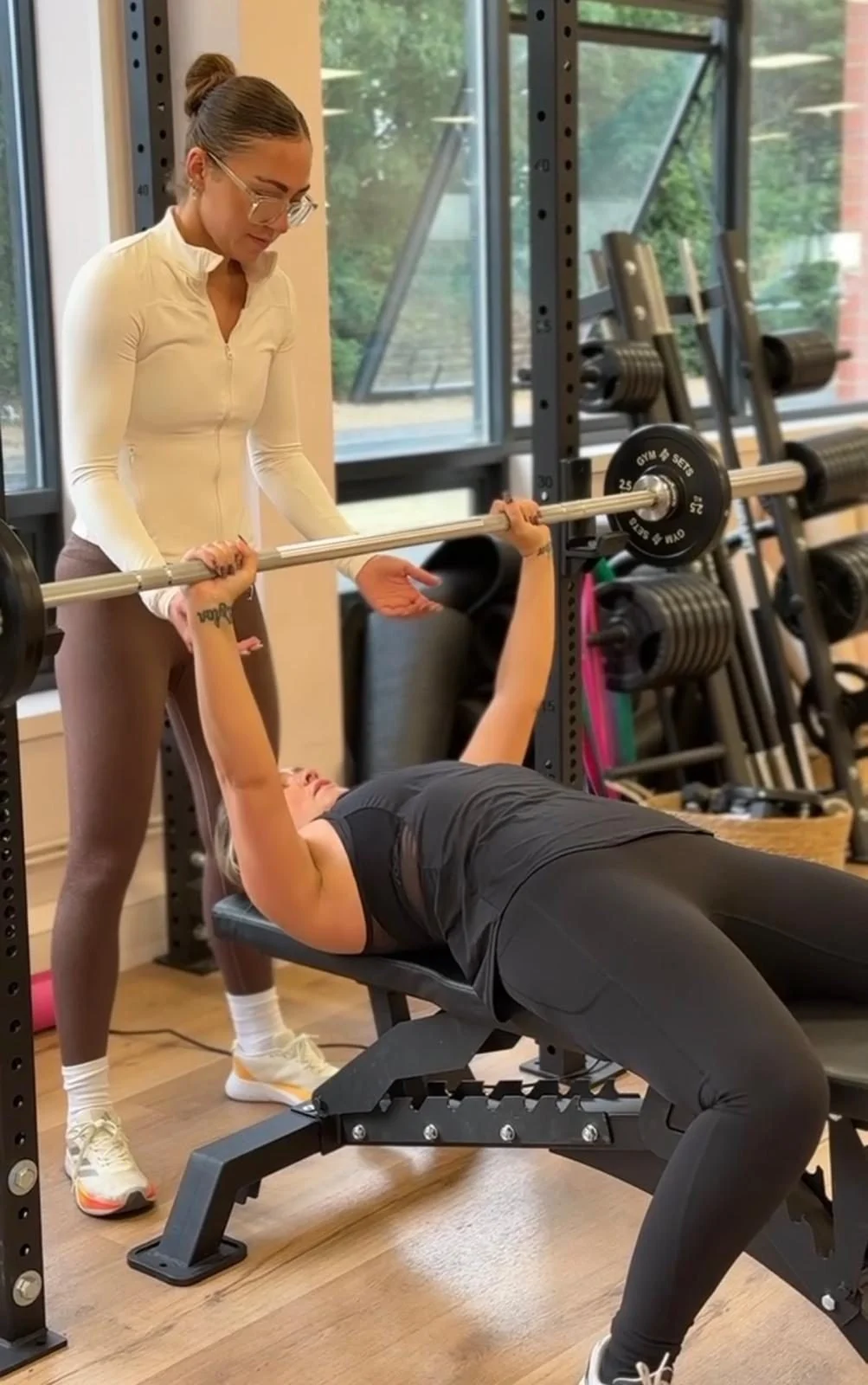
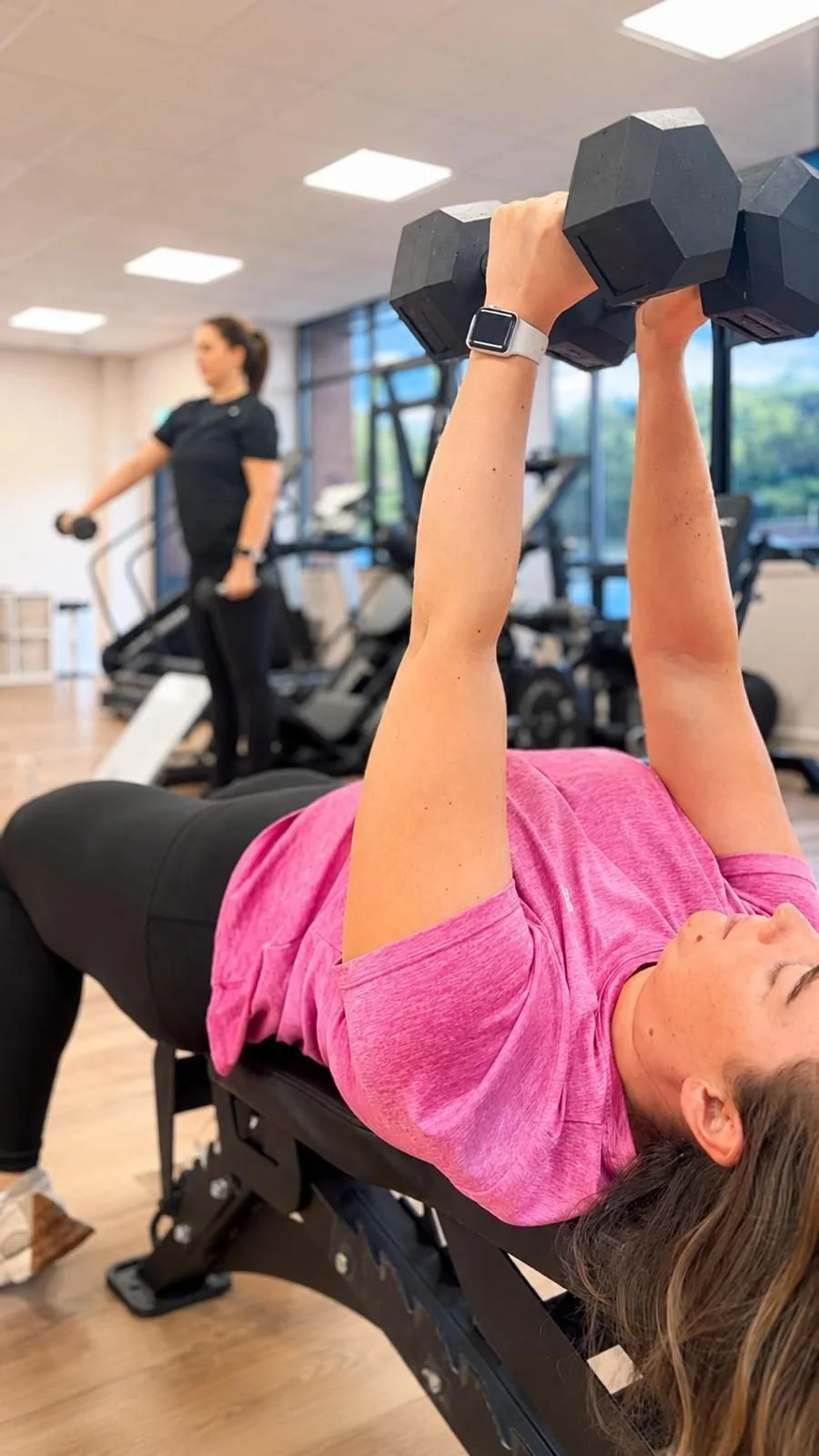
- Heavier lifts, like the bench press, are spotted.
- Every movement has an easier and harder option.
- You are always encouraged to stop and ask if something does not feel right.
A bit of muscle soreness a day or two after a new session is normal. Sharp pain is not, so tell your coach and get it checked by a health professional if it carries on.
How often should you train?
For most beginners, two or three strength sessions a week is a brilliant place to start. It meets the UK guideline for muscle strengthening, gives you enough practice to learn the lifts and leaves time for recovery, which is when your body actually gets stronger. Consistency beats intensity every time: two sessions a week for months will do far more than five sessions for a fortnight.
Strength training FAQs
I have never lifted a weight. Can I still join?
Absolutely. Lots of our members started exactly there, and classes like Lift Club are designed to teach you from scratch.
Will I be the only beginner?
Very unlikely. Beginners are the norm at strongher, and every class has options for every level.
How quickly will I see results?
Many beginners find their lifts go up quickly at first as they learn the movements. Everyone is different, so the best measure is your own before and after, like the boards our members held up.
Do I need to sign up for a long contract?
No. There is no joining fee and you can cancel any time. You can see the options on our pricing page.
Is there an easy way to try a class?
Yes. We run free Pilates every Sunday, which is a relaxed way to meet the coaches and see the studio. Keep an eye on our events page for special sessions too.
Ready to get stronger?
You do not need to know what you are doing, and you do not need to be fit already. You just need to start. Come and have a free look around our women-only studio in Washington, meet the coaches and ask whatever you like. Get in touch here and we will take it from there, one rep at a time.